How to Practice Lectio Divina
An ancient Christian method of prayerful Scripture reading that leads from words to silence
 Pray FocusJune 20, 202630 min
Lectio Divina (Latin for "Divine Reading") is an ancient method of praying with Scripture rooted in the practice of the early Church Fathers. Origen (3rd century) and Ambrose (4th century) both encouraged prayerful reading of Scripture. The method was given its classic four-step structure by Guigo II, a Carthusian monk, in his 12th-century work "The Ladder of Monks." He compared the stages to rungs of a ladder reaching toward God. The Benedictine tradition adopted and popularized the practice, making it central to monastic life.
Unlike Bible study, which seeks to analyze and understand a text, Lectio Divina seeks to encounter God through His Word. The practice moves through four stages: Lectio (reading), Meditatio (meditation), Oratio (prayer), and Contemplatio (contemplation). Each stage goes deeper, from the surface of the text to a place of silent resting in God's presence. A complete session typically takes 20 to 30 minutes, though even a shorter session can be fruitful.
The Second Vatican Council encouraged all the faithful to practice Lectio Divina, and Pope Benedict XVI affirmed its importance at the 2008 Synod of Bishops, saying it can "bring about a genuine interior transformation." It requires no special training, just a Bible, a quiet space, and a willingness to slow down and listen.
Step-by-Step Instructions
Lectio (Reading)
Choose a short passage of Scripture, no more than 10 to 15 verses. Read it slowly and attentively, as if for the first time. Do not try to analyze or interpret it. Simply listen to the words. If you are reading alone, consider reading aloud. Read the passage two or three times. Notice which word, phrase, or image catches your attention. This is not an intellectual exercise; let the text wash over you.
Meditatio (Meditation)
Focus on the word or phrase that stood out during your reading. Turn it over in your mind. Ask yourself: Why did this particular word catch my attention? What is God saying to me through this? How does this connect to my life right now? This is like chewing food to extract its flavor. Stay with the word or phrase as long as it holds your attention. Do not worry about making progress through the passage.
Oratio (Prayer)
Now respond to God in prayer about what has arisen during your meditation. This might be praise, confession, a request, gratitude, or simply telling God what you feel. Your prayer flows naturally from the text and your reflection on it. Be honest and personal. This is not formal prayer; it is a heart-to-heart conversation prompted by what God has spoken to you through His Word.
Related Guides
How to Pray the Rosary
A complete step-by-step guide to praying the Rosary with all four sets of mysteries
How to Pray the Angelus
Learn the ancient prayer traditionally prayed three times daily at 6 AM, noon, and 6 PM
How to Pray the Divine Mercy Chaplet
Pray the chaplet given to St. Faustina Kowalska using ordinary rosary beads
Learn to pray.Make it a daily habit.
One email at a time, at your pace
Join our free email course and learn simple, time-tested ways to pray, with one small thing to try each time, so prayer slowly becomes part of your day.
- 8 short lessons: the Daily Examen, Lectio Divina, ACTS and more
- One tiny exercise each time, so praying becomes a habit
- Gentle and practical, never preachy. Free, forever.
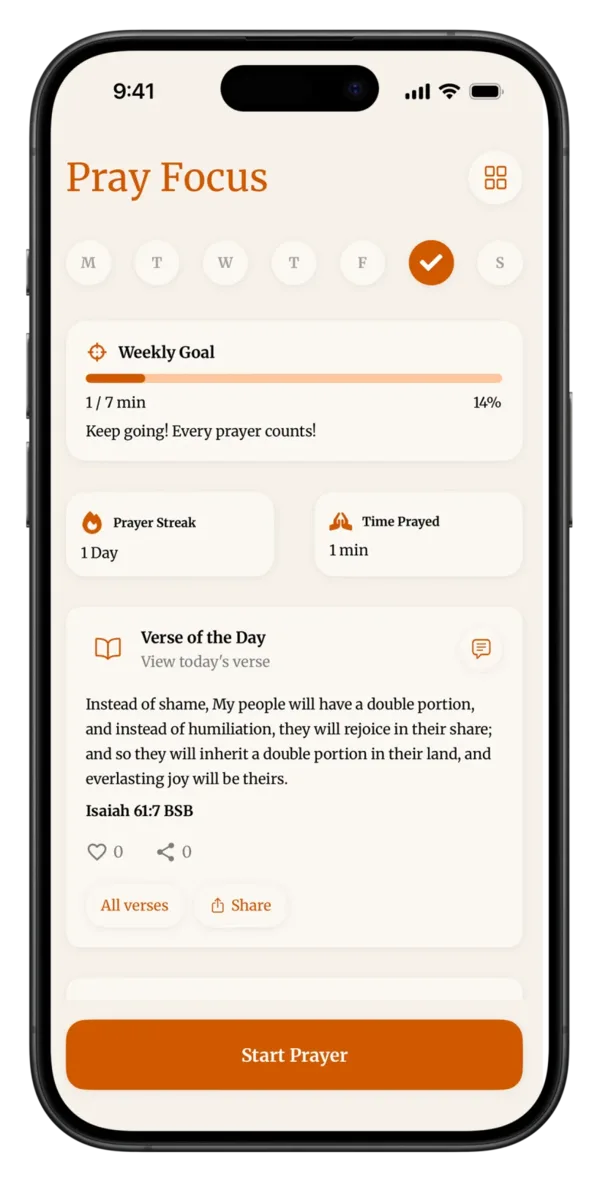
APP BLOCKING
Pray before you scroll.
DAILY SCRIPTURE
From 3 Christian traditions.
AI BIBLE CHAT
Talk to the Bible.
Turn mindless scrolling into a prayer habit

Point your phone camera at the QR code.
Download today for free
It takes 2 minutes to get started. Download this Christian prayer app, set up the app blocker, and begin building a praying habit.